Ellsbeth d’Poiters
Youngest daughter of Eleanor XXXI, sister to Eleanor XXXII, and aunt to Eleanor XXXIII. Ellsbeth was assigned the sobriquet d’Poiters…

Encyclopedia Spotlight




Featured Article
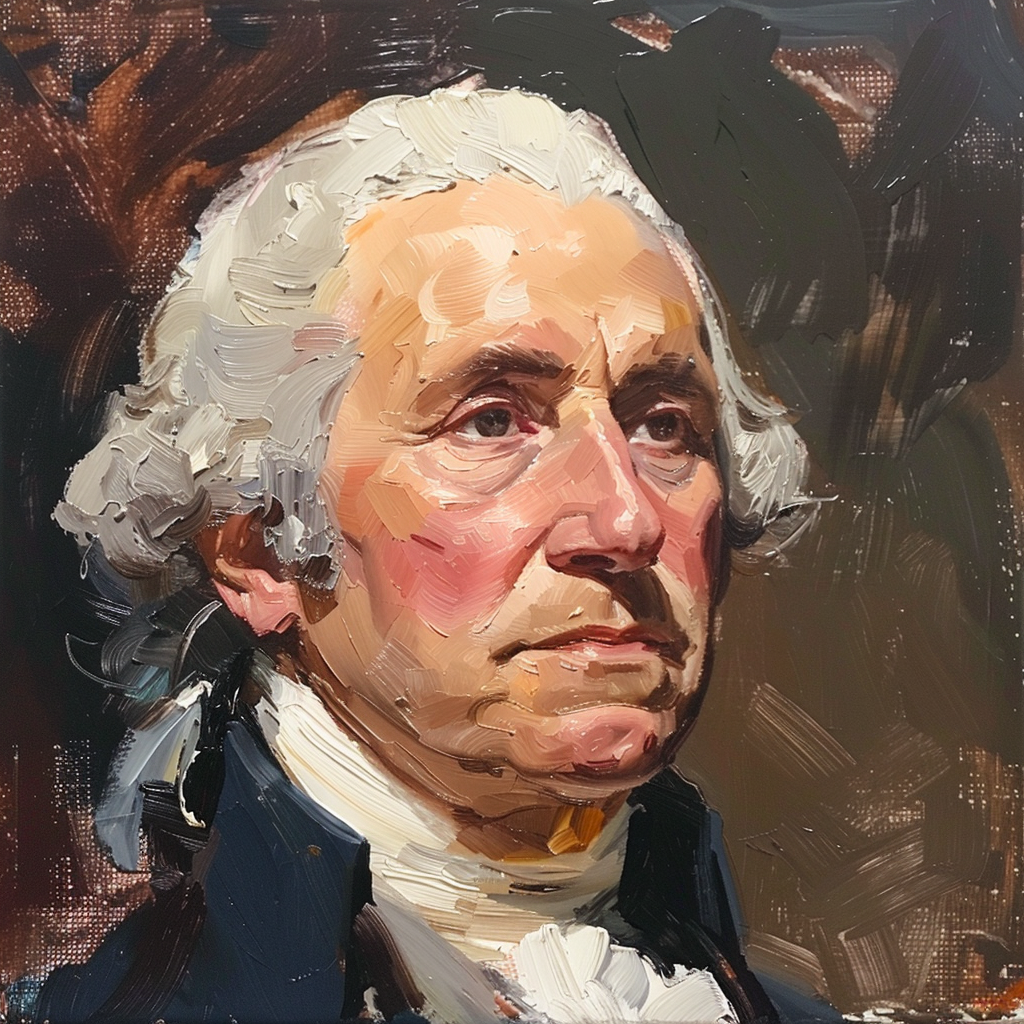
The first president of the Union of American States.
The Founding of the Union of American States
After successfully leading the colonial forces to victory against Grand Britain, George Washington was unanimously elected as the first President of the Union of American States in 1789. His presidency marked the foundational period of the Union, as the newly independent nation sought to establish itself on the world stage while balancing the competing interests of planter aristocrats, industrialists, and frontier settlers.
Unlike in the north, where the United States of New England was embracing a more centralized, mercantile economy, the Union remained a land of sprawling plantations, reliant on enslaved labor and controlled by an entrenched aristocracy. Washington, though personally uncomfortable with slavery, knew that abolition was politically impossible, as the powerful planter class had built the economy of the Union upon forced labor. He avoided direct confrontation on the issue, instead focusing his presidency on nation-building, military stabilization, and political unity.
During Washington’s presidency, the new government was fragile, plagued by factionalism between:
To balance these competing interests, Washington established the foundations of the federal government, including:
Washington also oversaw the creation of Arlington House in Great Virginia as the permanent capital of the Union, chosen for its proximity to the wealthiest planters and its strategic position along major trade routes.
During Washington’s second term, the Union’s aggressive expansionist policies led to increasing tensions with both Louisiana (then a territory under Spanish control) and indigenous nations across the southeastern territories.
Washington tried to maintain diplomatic relations but often deferred to state militias and private armies, which acted with near-total autonomy in frontier regions.
By the end of his presidency, Washington was exhausted by political infighting. The divide between Federalists and the planter aristocracy had widened, with many landowners openly defying federal authority.
Washington’s final major acts included:
In 1799, George Washington declined to run for a third term, setting a precedent for peaceful transitions of power—though this tradition would later be shattered. He retired to his estate, where he died later that year.
Washington’s presidency was seen as a golden age by nationalists, but a wasted opportunity by reformers, who believed he lacked the will to challenge the planter elites. His reluctance to confront slavery ensured that it would remain the central issue that would define—and ultimately destroy—democracy in the Union.